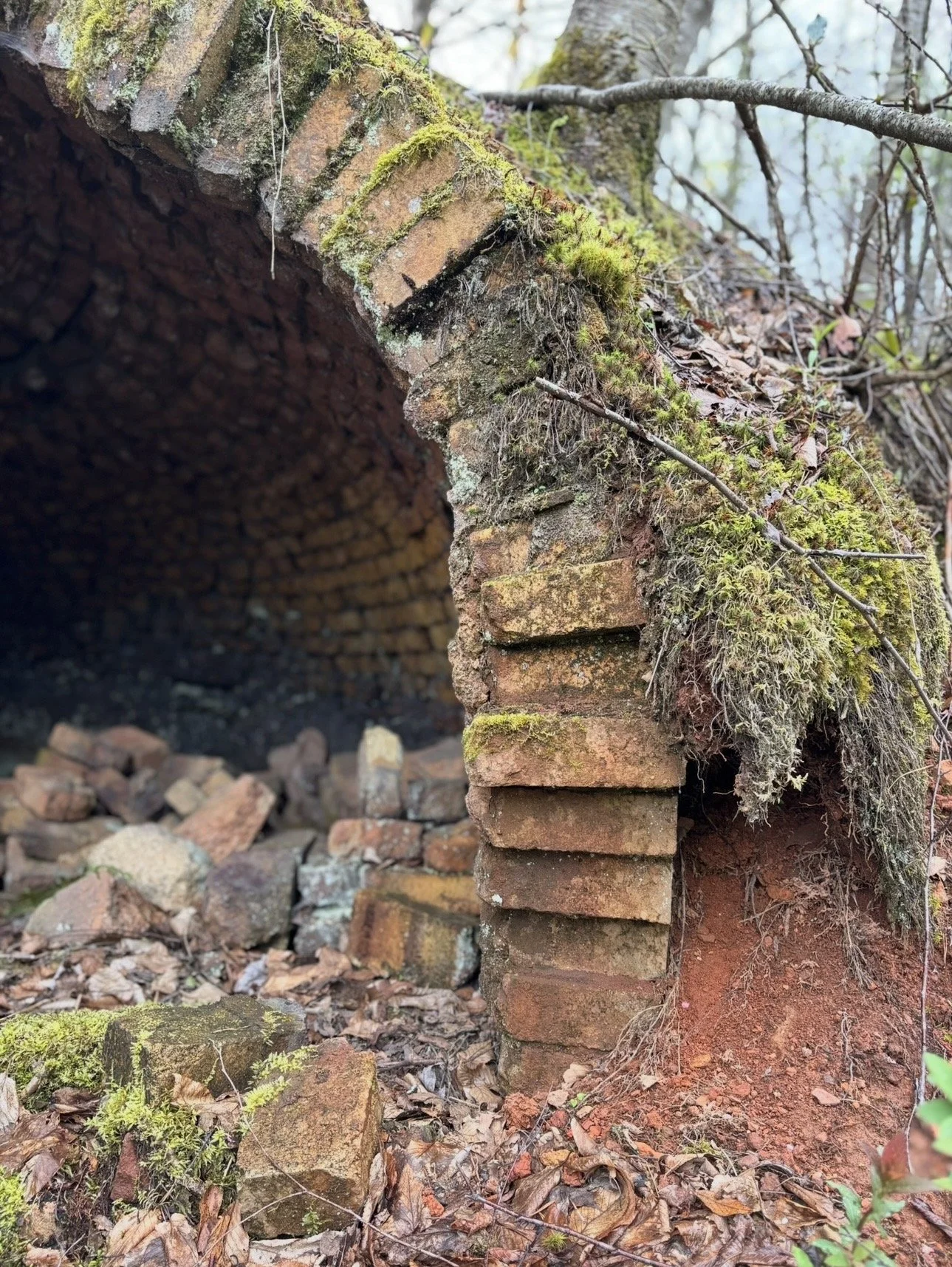

The Coke Ovens of Coketon
Along the road from Thomas toward Douglas, tucked into the Blackwater Canyon, are the remains of an important part of Tucker County’s industrial history: the coke ovens of Coketon.
Today, the ovens sit quietly among the trees, but more than a century ago, this area was filled with workers, trains, coal, smoke, and the heat of hundreds of coke ovens.
Coketon grew as part of the coal industry that developed throughout Tucker County in the late nineteenth century. The Davis Coal & Coke Company became one of the most important companies in the area, operating mines, railroads, and coke ovens around Thomas and Coketon. The company used the coal mined in the area not only as fuel but also to produce coke.
But what exactly was coke? Coke was made by heating coal in an oven while limiting the amount of oxygen. The heat drove off water, gases, and other volatile materials, leaving behind a carbon-rich material that could burn at a very high temperature. This made coke especially valuable to the iron and steel industries.
During the late nineteenth and early twentieth centuries, the growing steel industry needed enormous amounts of coke. Tucker County’s coal could therefore become part of a much larger industrial system extending beyond West Virginia into Pennsylvania and other parts of the country. The first coke ovens at Coketon were experimental beehive ovens built in 1887. The experiment was successful, and the company rapidly expanded production. By 1897, the Davis Coal & Coke Company had approximately 370 ovens operating around Thomas and Coketon. At the same time, another 100 beehive ovens were operating at Douglas under the Cumberland Coal & Coke Company. By the beginning of the twentieth century, the coke industry had become one of the defining features of the landscape.
Continuing down the canyon toward Douglas reveals another part of the same industrial story. Douglas was established in 1891 by Douglas and William Gorman, who were involved with the Cumberland Coal & Coke Company, a subsidiary of the Davis Coal & Coke Company. The community developed as a coal and coke town along the North Fork of the Blackwater River.
Douglas had its own company store, railroad depot, post office, school, houses, and other businesses and services. At its height around 1910, approximately 900 people lived in the community. The coke industry was also an important part of Douglas. Around 175 coke ovens operated there, adding another large group of ovens to those already operating around Coketon and Thomas. The railroad was particularly important to Douglas. The town sat along the railroad through the Blackwater Canyon, and trains carrying coal had to make their way through the steep canyon grades. Helper engines were used to assist trains as they traveled through the canyon.
For the people who lived there, the railroad was more than a transportation system. It was part of everyday life. Passenger trains connected Douglas with other communities, while freight trains carried the coal and coke that supported the local economy. Today, much of the activity that once filled Douglas is gone. The buildings, trains, mines, and ovens have disappeared or fallen into ruins. But the landscape still provides clues about what once existed there.
The coke ovens required a great deal of labor. Coal had to be brought to the ovens, loaded inside, heated, and then removed once it had been converted into coke. The work was hot, dirty, and physically demanding. Workers spent long hours around the ovens, where heat and smoke were constant parts of their working environment. The ovens were also closely connected to the railroad. Coal and coke produced in Tucker County had to be transported out of the mountains to markets farther away. The railroad through Blackwater Canyon connected the mines and ovens with the larger railroad network and made the industry possible.
The coke industry eventually began to decline. During the 1910s, newer methods of producing coke began to make the old beehive ovens less competitive. Instead of producing coke directly at every mining operation, coal could be shipped to larger and more efficient coking centers. Coke production in Tucker County gradually declined. After 1910, production fell significantly, and only small amounts were being produced after 1921. The industry continued in some places for a time, but the great age of the Coketon and Douglas ovens was coming to an end.
The decline had consequences beyond the ovens themselves. As the coke industry declined, the mines and communities that depended upon it also faced changes. Jobs disappeared, production slowed, and the industrial landscape that had developed around Thomas, Coketon, and Douglas began to change. The railroad, which had once been the lifeline of the industry, eventually stopped carrying coal and coke through the canyon. The sounds of trains, machinery, and industrial work gradually disappeared.
Imagine this canyon more than a century ago. Coal trains move along the tracks. Workers load coal into brick ovens. Smoke rises into the air as the coal is transformed into coke. Workers pull the finished coke from the ovens and prepare it for shipment. Mines operate nearby, while families live in the communities of Coketon and Douglas. For the people who lived here, this was not an abandoned historic site. It was home and work. Today, visitors traveling toward Douglas or walking the Blackwater Canyon Trail can still see pieces of that history. The ovens no longer burn, the trains no longer pass, and the smoke has disappeared.
But the coke ovens of Coketon are more than old brick structures. They are reminders of the people and industries that helped build Tucker County’s modern communities. They show how coal, coke, railroads, and immigration transformed the Blackwater Canyon and connected this small mountain region to the larger industrial world. The industry is gone, but the ovens remain.
The story remains in the bricks.