Testudines
Chelydridae & Emydidae
Reptilia
(Order)
Testudines
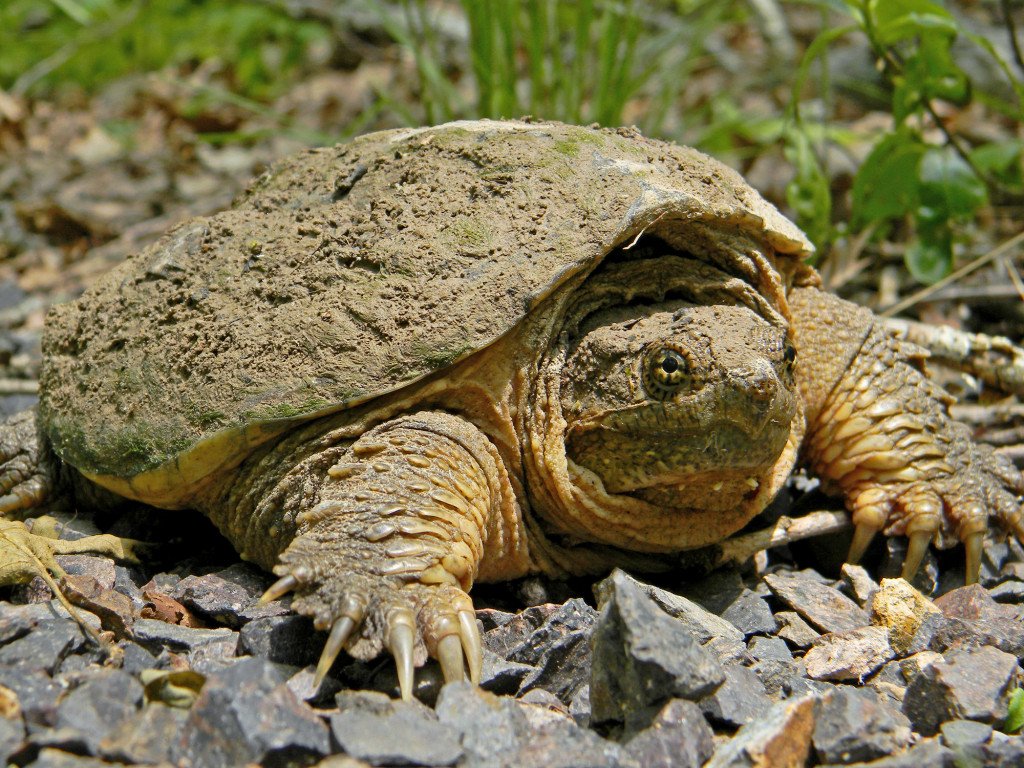
Common Snapping Turtle
Chelydra serpentina
Common Snapping Turtles are generalists, occupying a large number of habitats that hold water for long periods of time. In the Blackwater River Watershed, they are found in ponds, bogs, swamps, and other wetlands. They are the largest turtles in our watershed, maxing out around 36cm in shell length. Snapping turtles hold one of the oldest reptiles’ lineages, having ancestors that trace back to the Permian period (before dinosaurs!). With their dinosaur like claws, huge tails, and sharp beaks, they’re unmistakable. Although rarely seen except during the early summer, when females migrate across land to lay their eggs.
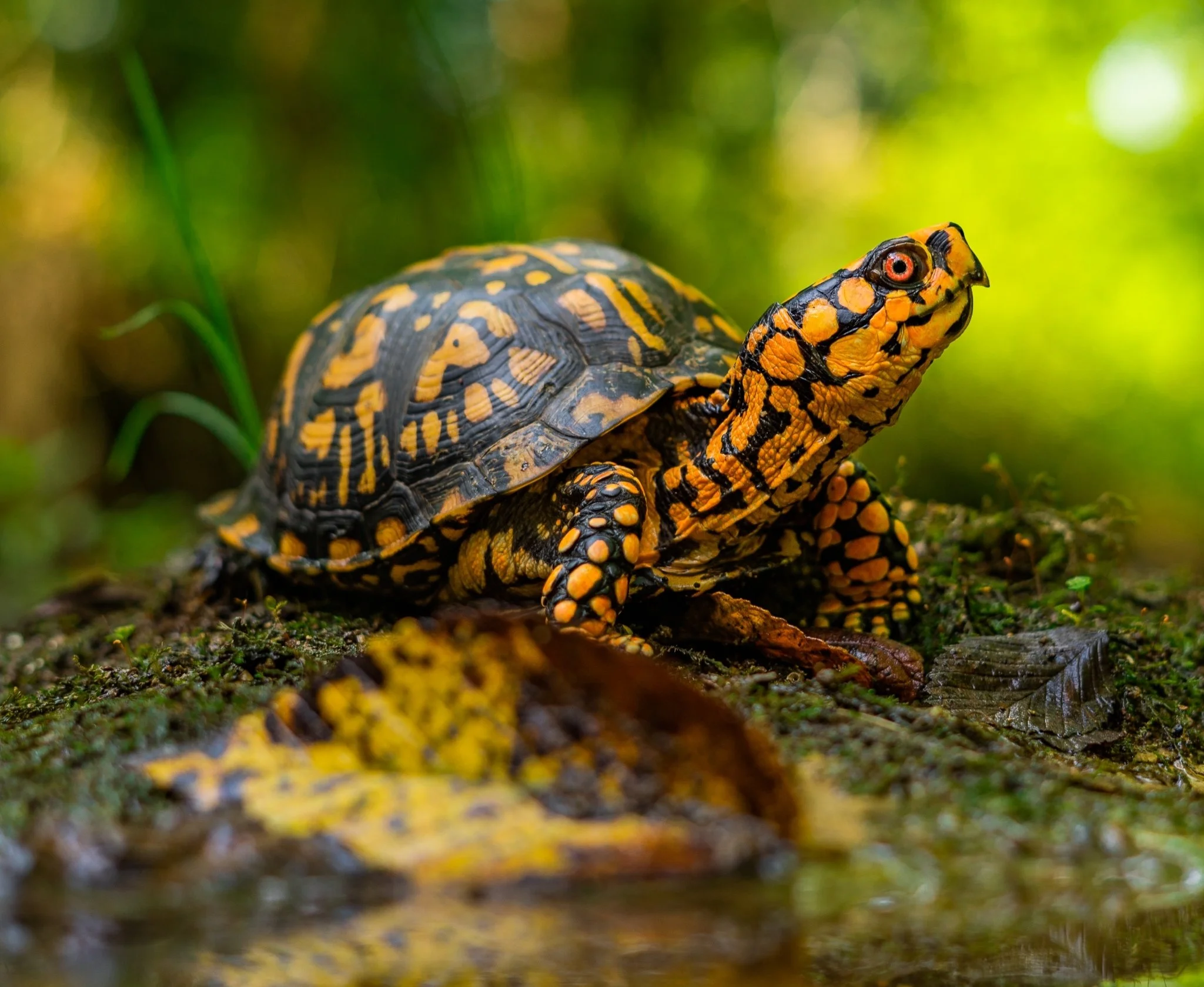
Eastern Box Turtle
Terrapene carolina carolina
The Eastern Box Turtle is our most terrestrial turtle. They inhabit mixed-mesophytic forests but are known wanderers and can travel through various ecosystems, in search of food or other resources. They have a dome-shaped shell that’s covered in varying degrees of yellow and orange markings. Their plastron is hinged, allowing them to entirely recede into their shells and close it (like a box!). Their feet and heads will also feature yellow to orange spots or markings; they max out at 20cm in length.
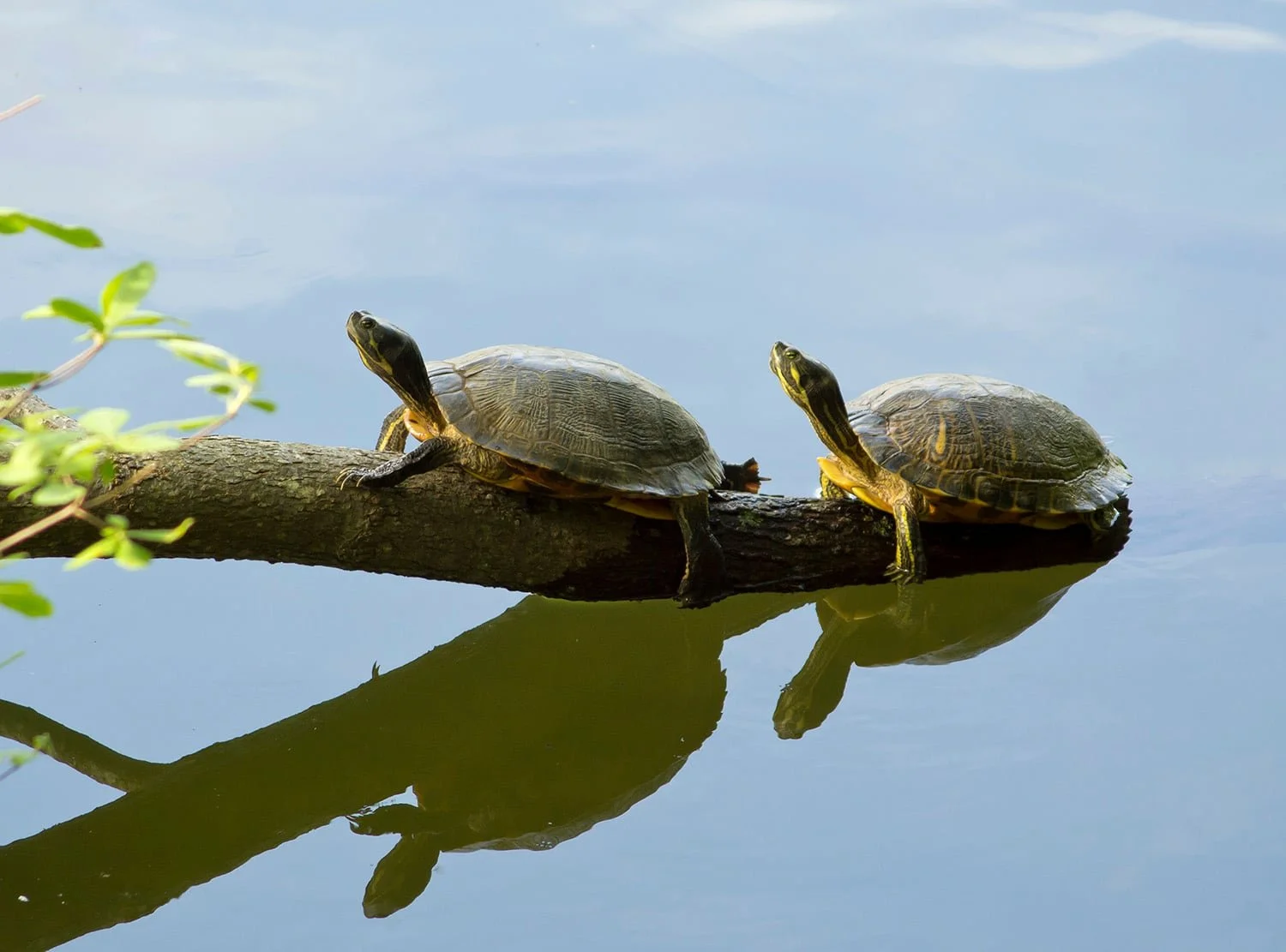
Midland Painted Turtle
Chrysemys picta marginata
Midland Painted Turtles keep-out of fast flowing water sources and opt for more gentle, shallow habitat with abundant vegetation. They inhabit bogs, fens, ponds, marshes, swamps and slow-moving rivers. They have a dark carapace and a yellow plastron with red markings along the edge. Their necks are striped with red tones closer to the body, and yellow up toward the beak. They have a set of yellow blotches on top of their heads. They’re small maxing out at a mere 25 cm.
