

Reptilia
(Class)
Squamata
(Order)
Snakes
Northern Red-Bellied Snake
Storeria occipitomaculata occipitomaculata
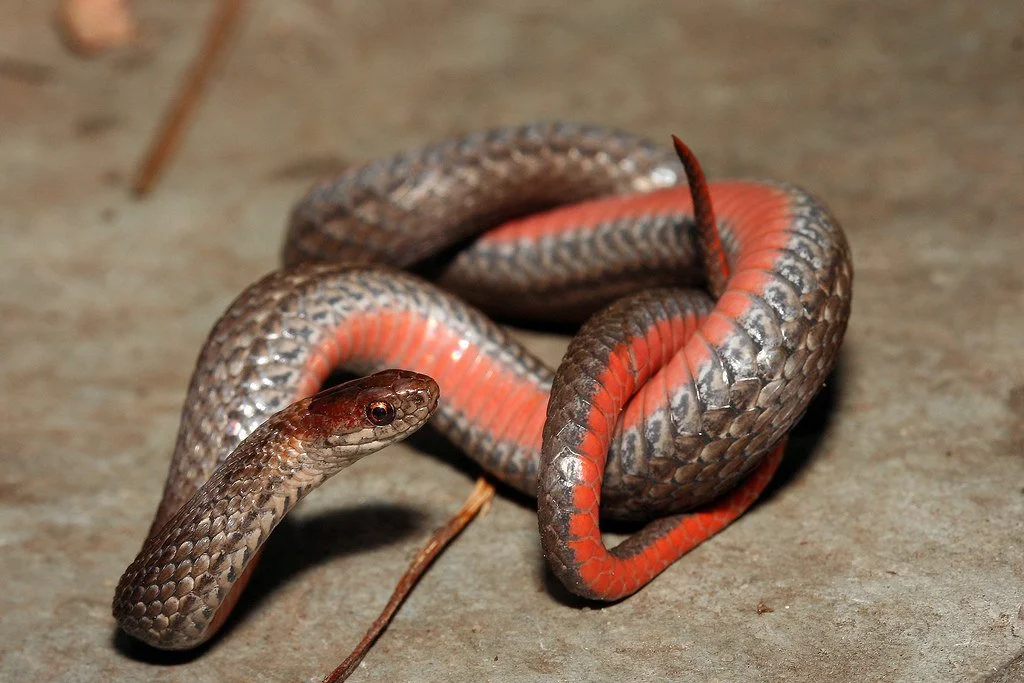
Northern Red-Bellied Snakes as the name implies, have a bright orange-red underside with a darker-variable dorsal coloration. They also have a light incomplete ring around the neck, and keeled scales. They are a smaller woodland species found in warmer habitats with open fields and mountain balds. Where they remain under leaves, rocks, logs and abandoned ant burrows. They are non-venomous.
Northern Water-Snake
Nerodia sipedon sipedon
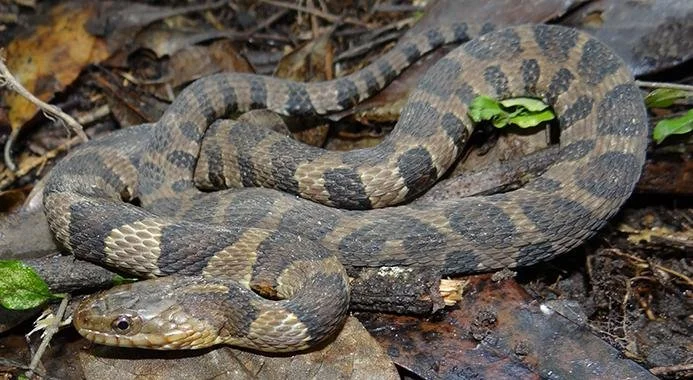
The Northern Water snake can grow up to 1.4 meters long and features dark tapering crossbands on the upper half of their bodies, and dark blotches running down to their tails. You can find them basking near streams, ponds, lakes, and wetlands. Where they prey on fish, frogs, salamanders, crayfish, and small mammals. While quick to flee, if possible, they will also bite repeatedly and act aggressively if threatened. Northern Water-Snakes are non-venomous, but do have an anti-coagulant saliva that causes bleeding if bitten.
Northern Ring-Neck Snake
Diadophis punctatus edwarsii
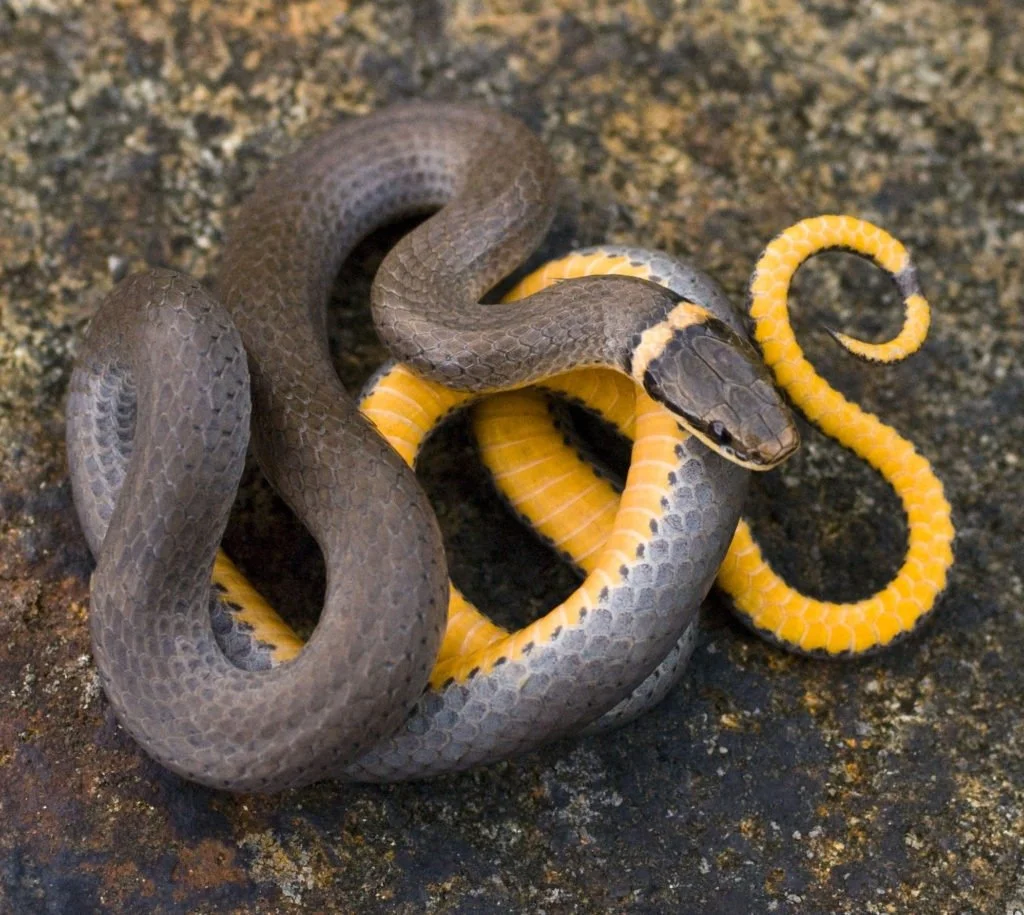
The Northern Ring-Neck Snake is a small, nocturnal species that can be found in qn array of habitats. Including woodlands, rocky outcrops, and damp environments. They can be identified by a yellow-orange ring around the neck, against a bluish gray body, and an underside matching the ring. Look for these tiny non-venomous snakes under fallen rocks, logs, and leaf litter during the day.
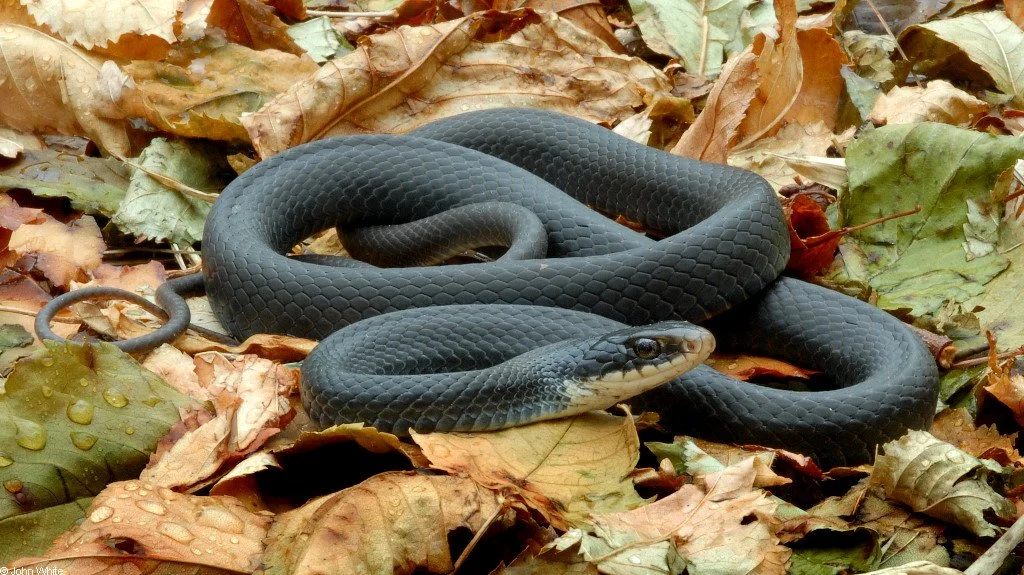
Northern Black Racer
Coluber constrictor constrictor
Northern Black Racers have long, sleek bodies up to 2m in total length. Adults are uniformly black dorsally and darker gray on the ventral side. The chin and portion of the neck are often white. As the name implies, these are very active, fast-moving snakes that will flee, if possible, in the presence of danger. They are often found in open grassy areas as well as urban sites with lots of cover and debris. Black racers are non-venomous and more likely to slither away than strike a bite.
Smooth Greensnake
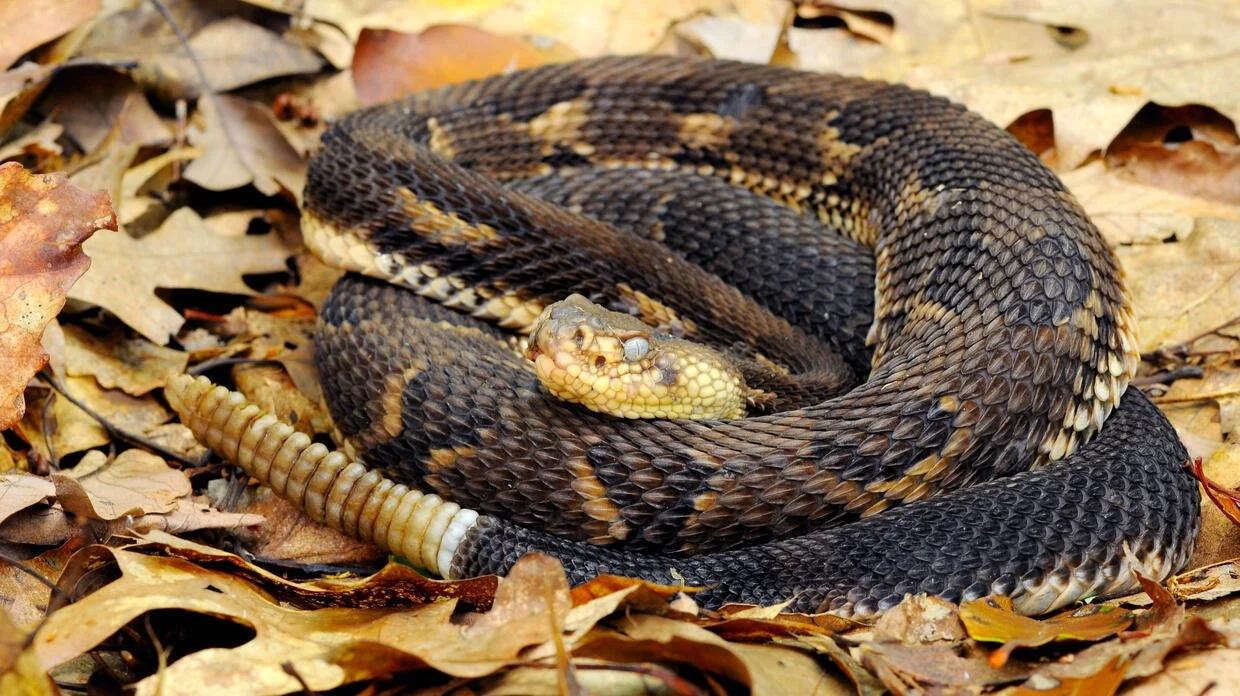
One of two venomous species in West Virginia, Timber Rattlesnakes are venomous pit vipers known for their distinctive rattling and timbered habitats. In the Blackwater Watershed, these snakes can be found in remote, brushy, mountainous terrain with rocky areas. They are quickly identifiable, with a series of dark chevrons against a brown-yellow base color, and a segmented rattle at the tip of their tails. Their heads also have the distinctive triangular shape attributed to venomous pit vipers.
Rattlesnakes get their name from their rattle, which warns looming predators to stay back before they strike. If you hear this rattling while hiking, it’s best to stop and look around before proceeding. Rattlesnakes do not want to bite you- but will if you don’t heed their warning. Although they may be frightening, like all other snakes they are keystone species to the environment.
Eastern Milk Snake
Lampropeltis triangulum
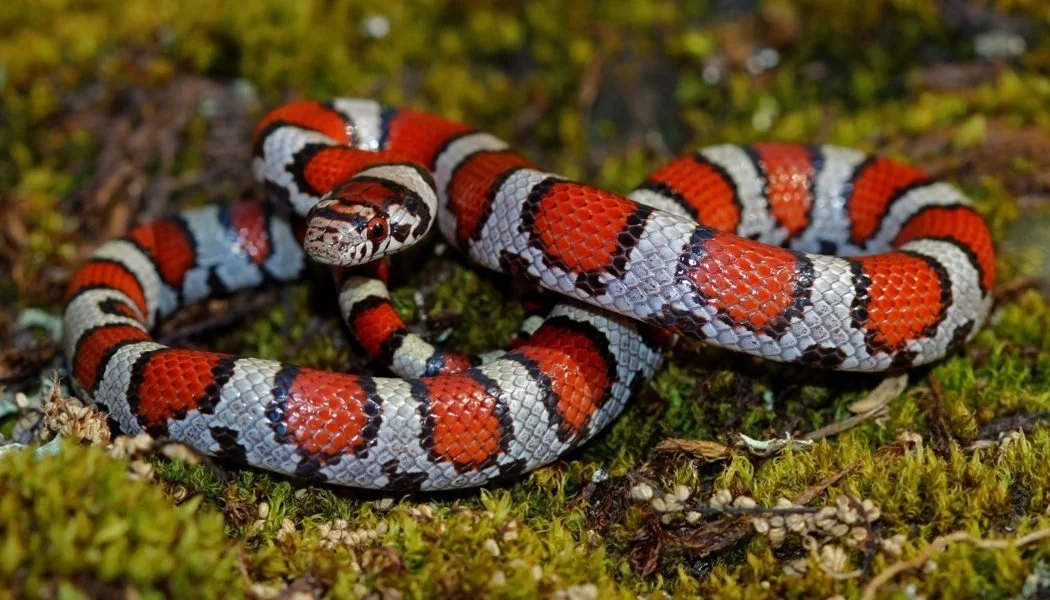
Eastern Milk Snakes are colorful non-venomous native, displaying bands of alternating reddish and brown blotches outlined in black. Their bellies are cream colored and have a checkerboard pattern with black spots. They have a marking on the top of their heads resembling a “Y” or “V” shape.
You can find this species in a wide variety of habitats, but mostly in open woodlands or forested regions. They got their name due to early farmers finding them in bards, who assumed they were stealing milk from cows.
In reality they have no way of drinking milk, and prey on small amphibians and mammals.
Eastern Garter Snake
Thamnophis sirtalis sirtalis
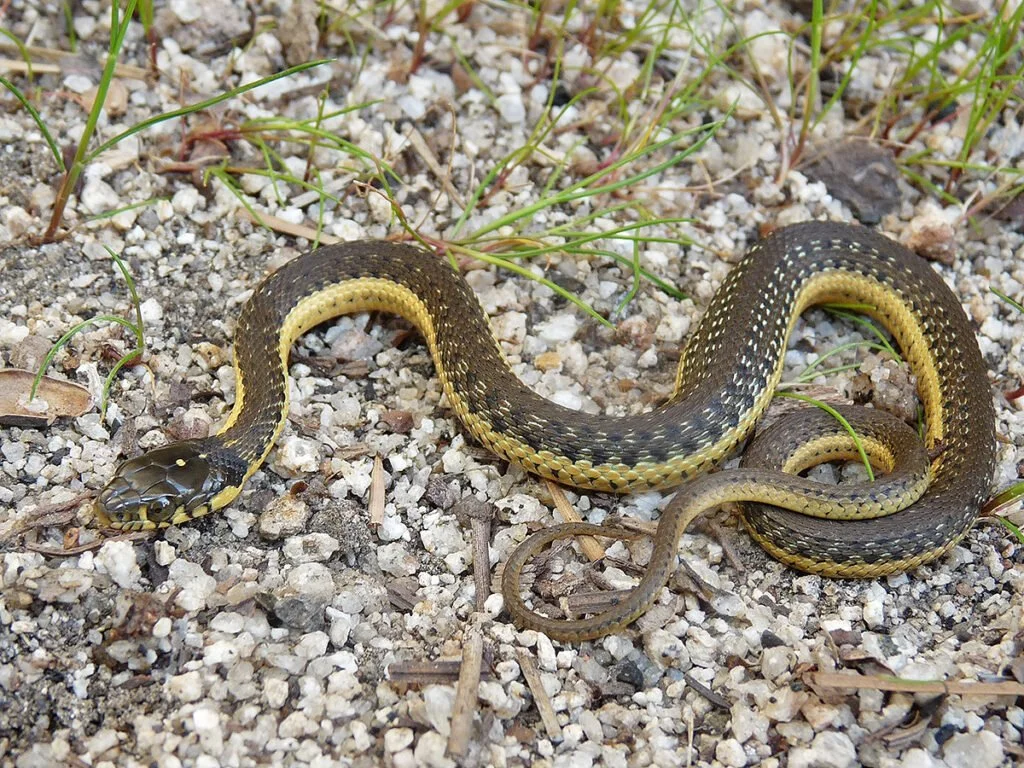
Eastern Garter Snakes are highly variable species ranging in colors from dark browns to olive greens, with dominant yellow-white mid dorsal stripes. Many individuals may be seen with considerably more spots in comparison to stripes. They are most commonly found in meadows, marshes, woodlands, along hillsides, and in urban areas.
Eastern Garter-snakes are non-venomous, and usually docile. They are often nicknamed “garden snakes” as they will frequent gardens and often deter mice or scavengers from eating the crops.
Gray Ratsnake
Pantheropis spiloides
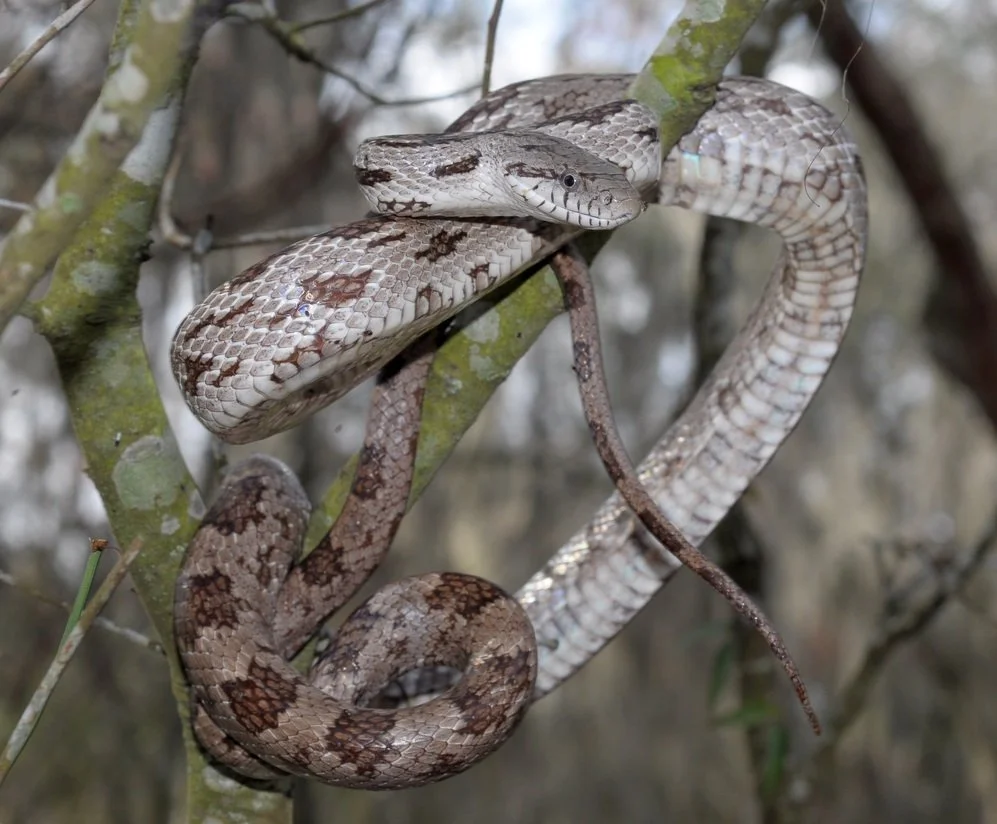
Gray Rat Snakes can reach impressive lengths ranging from 1.2-2 m. They are characterized by a typically plain back with little to no patterning, and a flat white belly with dark blotches. Habitat preferences include rocky areas, timbered hillsides, swamps, and stream valleys. They are also exceptional climbers and can often be seen moving through treetops, and rafters of old buildings and barns. They are non-venomous, and more likely to run from an individual than strike immediately. Yet they will defend themselves if threatened.
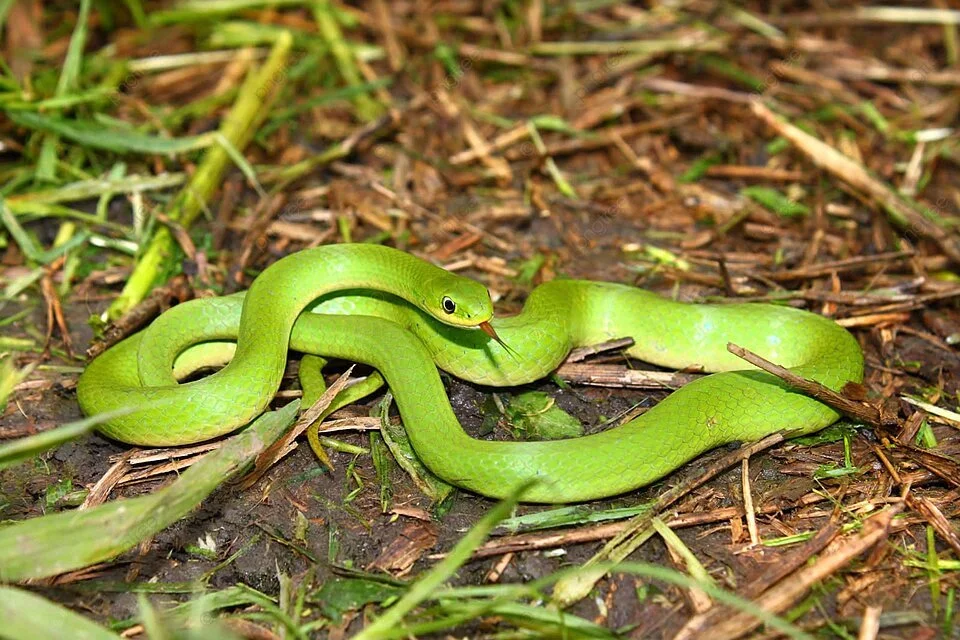
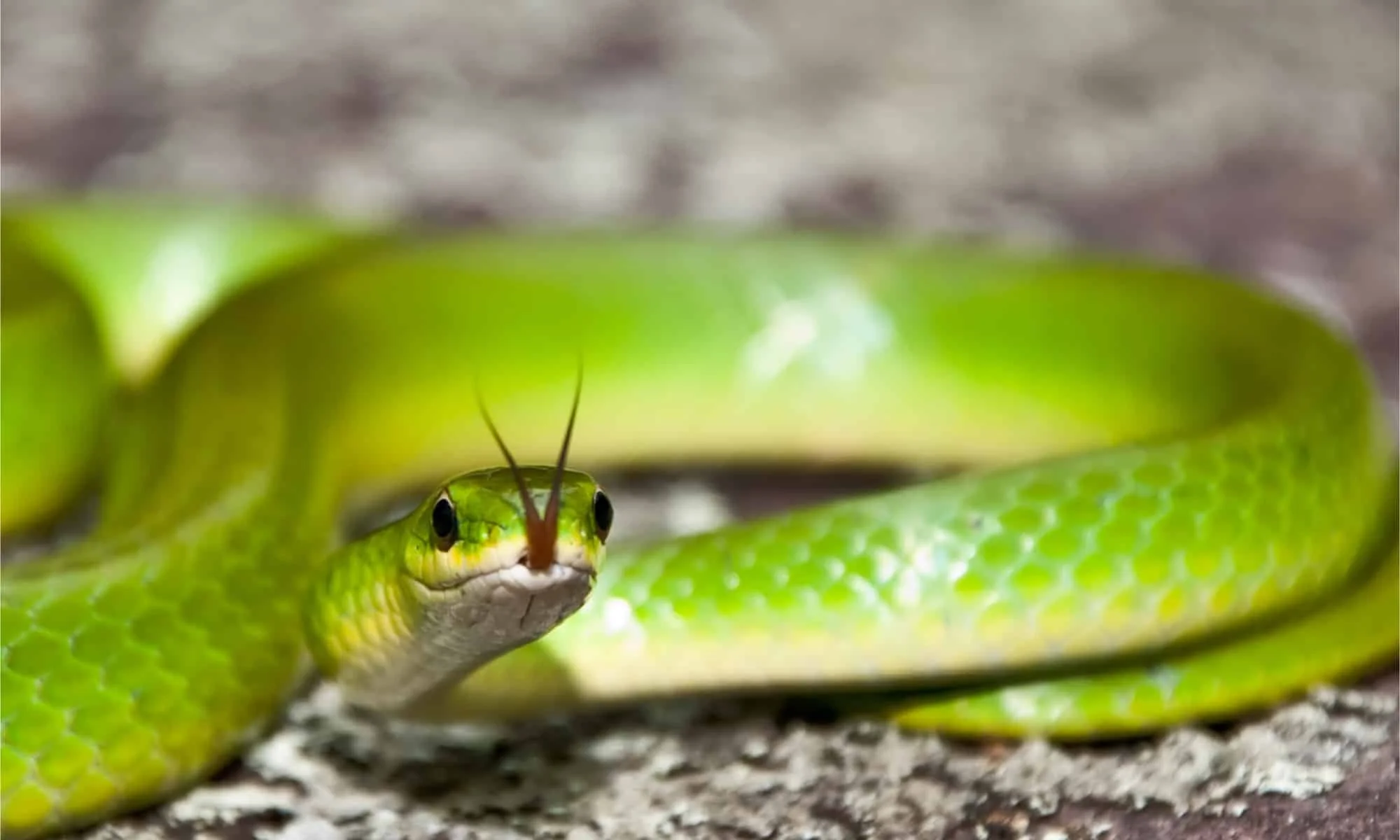
Opheodrys vernalis
Primarily found in grasslands, open woods, and marshes, the Smooth Greensnake is classified as a “small-Medium” sized Snake. This species displays a unform light green dorsal coloration and a light yellow-white belly. Their adapted coloration allows them to perfectly blend into their environment, where they prey on small insects and spiders. They are non-venomous, and often docile.
Timber Rattlesnake
Crotalis horridus
Eastern CopperHead
Agkistrodon contortrix
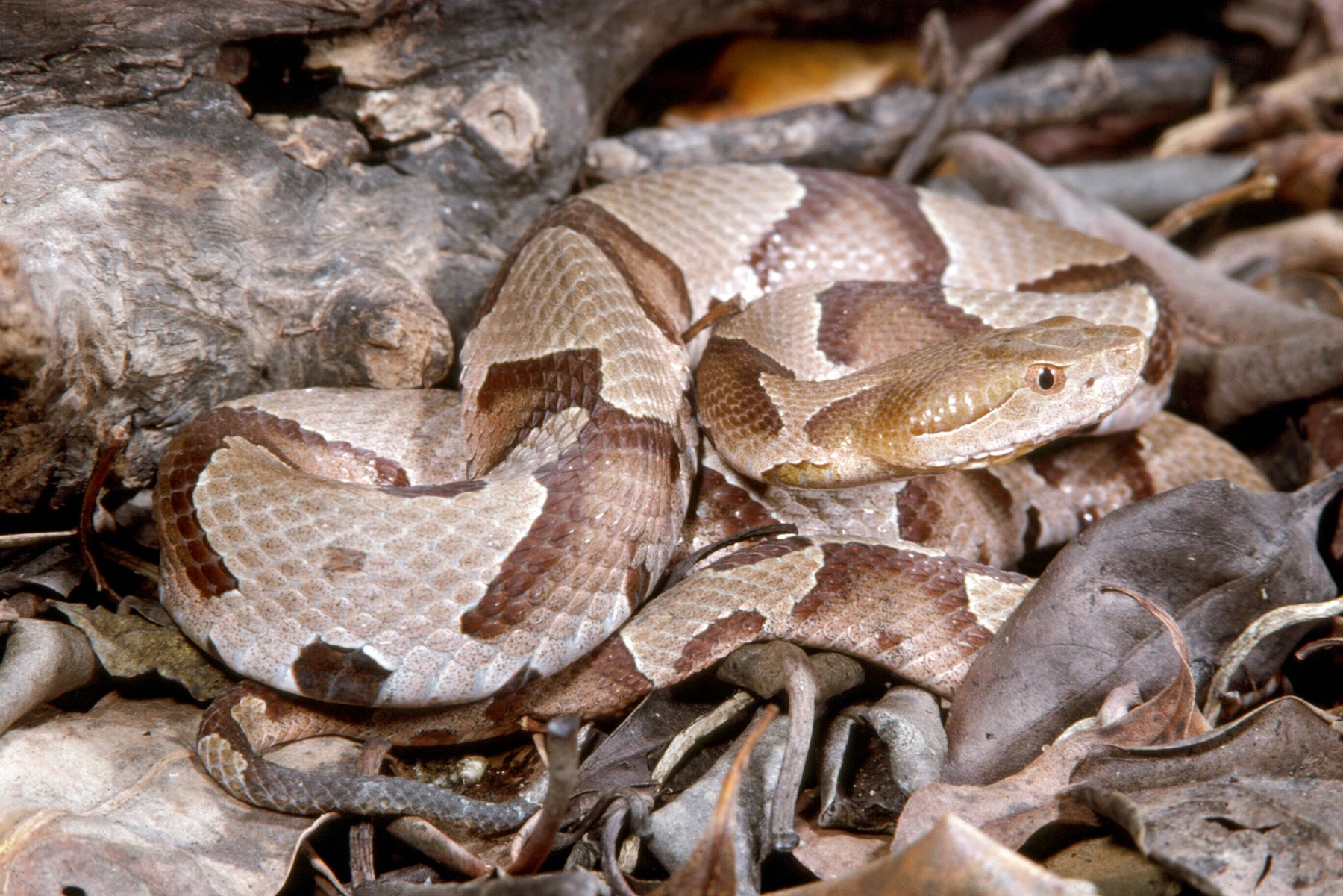
Copperheads are a widespread species of venomous pit viper, endemic to the Eastern United States. Copperheads have distinctive dark brown hourglass shaped markings, overlaid on a coppery reddish-brown body. Like most venomous snakes and pit vipers, they sport triangle shaped heads. Copperheads favor rocky outcroppings, deciduous forests and mixed woodlands. However, they can also be found in low-lying swamp and marsh regions. The copperhead in an ambush predator, feeding on a variety of prey.
Like most pit vipers, when in contact with humans or a threat they will freeze-Rather than slithering away or fleeing. As their primary self-defense is camouflaging with their environment, in an attempt to remain unseen.
Bites occur due to people stepping on or too close to them.