Hymenoptera
(Order)
Bees & Wasps
Apocrita
Bees, Wasps, & Ants
(suborder)
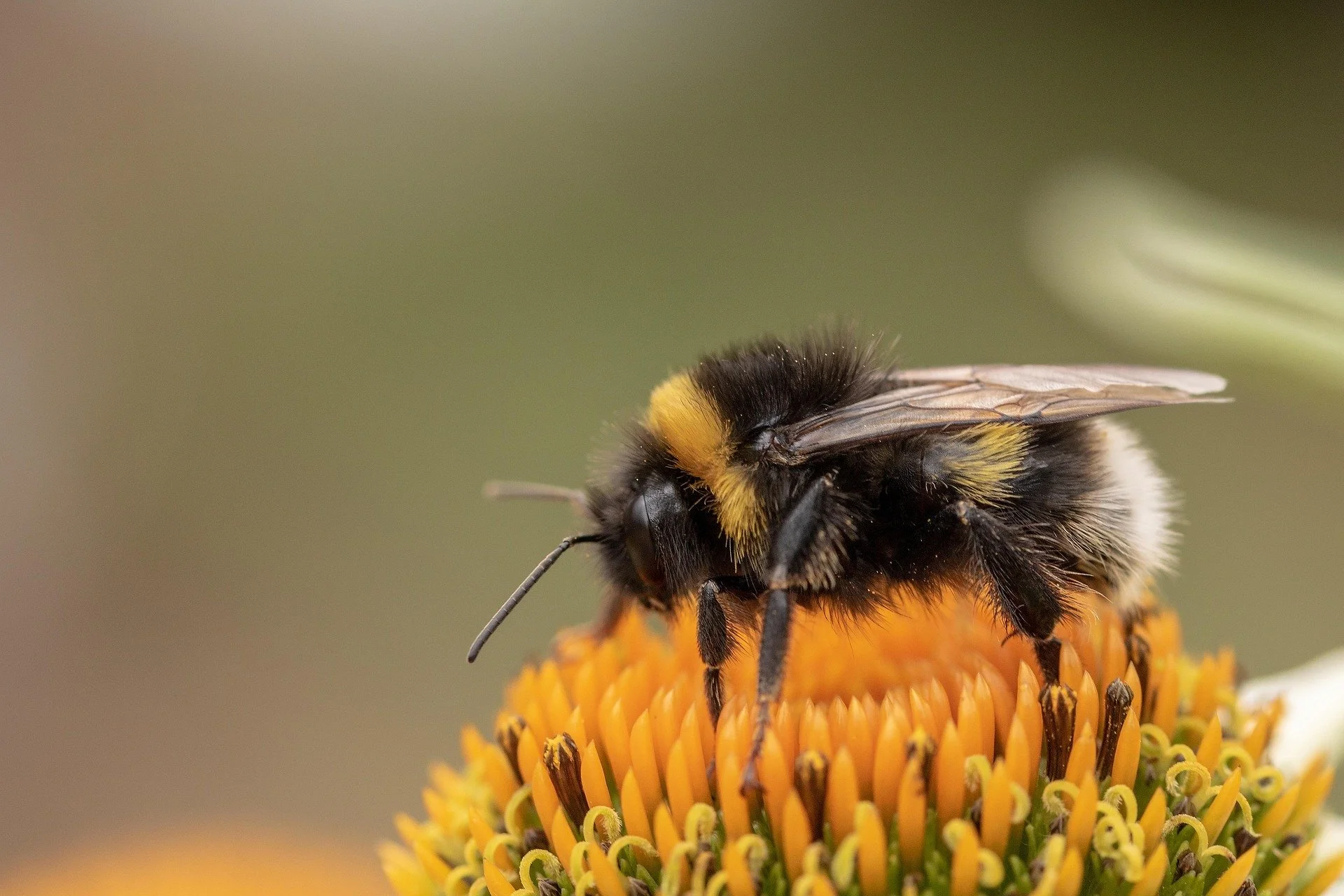
Bumble Bee
Bombus lapidarius
Bumble Bees are recognized for their fuzzy black and yellow stripes. One of West Virginia’s many vital pollinators. Bumble bees are social, living in colonies of up to 200 individuals. They live in smaller, underground nests utilizing abandoned burrows from mammals. Each colony is led by a queen, who is responsible for maintaining the nest and laying eggs.
Bumblebees have large compound eyes that allow them to perceive ultraviolet light, this helps them locate flowers. Bumble Bees are one of the most effective pollinators, crucial for the fertilization of wildflowers and many agricultural crops. They pollinate in cooler temperatures than most other bee species, making them essential.
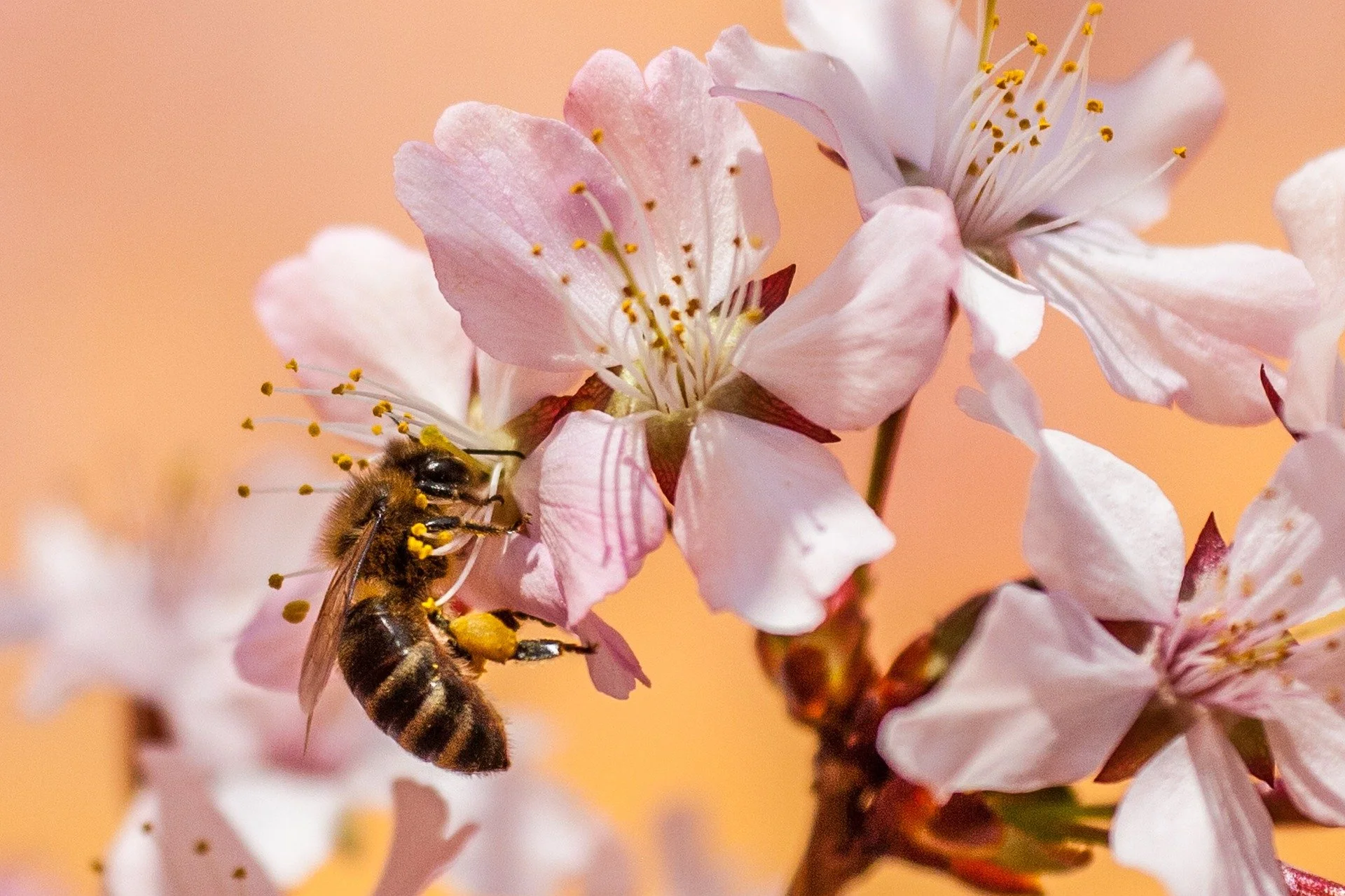
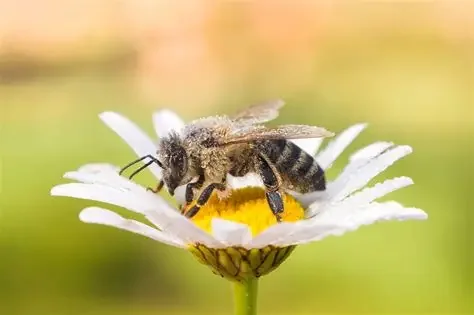
European (Western) Honeybee
Apis mellifera
European (western) Honeybees are the most common of 12 Honeybee species. Their Species name ‘mellifera’ is Latin for “honey-Bearing”.
These Honeybees like most are social, creating colonies with a single queen. Honeybees favor areas with an abundance of wildflowers or pollen bearing plants-Nectar from flowers is processed by worker bees. Worker bees evaporate the nectar until the moisture content is low enough that it will not mold. Then it transforms into honey, and they cover it with wax to store it.
In the cold seasons honeybees will consume honey to keep warm. For us humans, it’s a sweet treat! Honeybees have been semi-domesticated by humans, by establishing managed bee colonies to take care of them while also harvesting the honey for consumption.
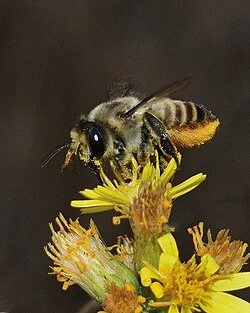
Leaf-Cutter Bee
Megachile lagopoda
Leafcutter bees are solitary Bees known for chewing leaves and flower petals into fragments for their nests. These bees will construct their nests in hollow cavities, or burrows in the ground. Usually made up of single long columns of cells. Females will place eggs in each cell with their own food supply. She walls off the cell, and the larva hatches, it consumes the supply and pupates and hatches as an adult after a few months of hibernation.
It is thought that the cuttings of leaves and flower petals protect the larval food supply. Some other types of leaf cutter Bees will also used dried plant resin.
Miner Bee
Anthpora abrupta
Miner Bee’s have stout, furry bodies that are often mistaken for bumblebees, they are typically friendly and non-aggressive. They are studied due to their nesting behaviors, being solitary, ground nesting bees.
They establish their nests in well drained soils, like clay in banks, hills and road cut-outs. They are also sometimes found creating nests between stones of old buildings, cabins or barns.
Females will build tunnels, each tunnel representing a single nest. They are often clustered together- and many will stay in the same location for years (generations).
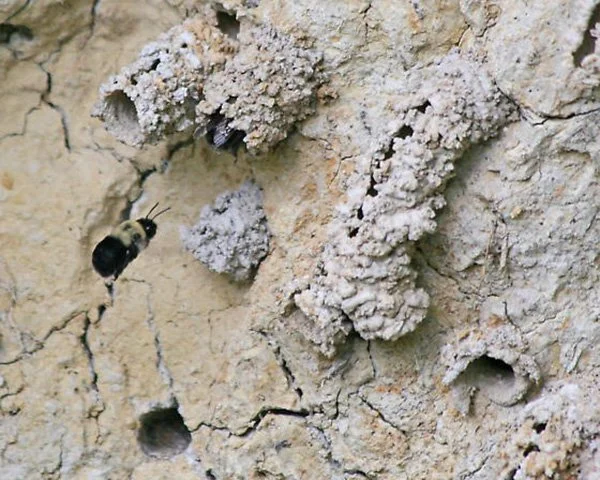
Small bees (Anthophora abrupta) making homes in a large root ball upended in August of 2008 by Hurricane Gustav. Baton Rouge - BREC Bluebonnet Swamp Nature Center, East Baton Rouge Parish, Louisiana, USA. May 14, 2009. Copyright © 2009 John Hartgerink.
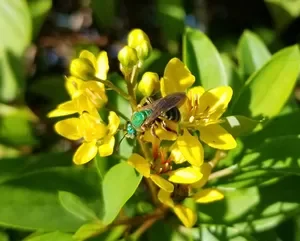
Sweat Bee
Halictus scabiosae
Sweat Bees are solitary and known for their attraction to human sweat. They do not produce honey, and do not sting unless provoked.
While they do not produce honey, like most Bees- Sweat bees are still important native pollinators. They adapt to the climates, flower structures and ecological relationships of their habitats across every continent (except antarctica).
Additionally, they are also important pollinators for agricultural crops like alfalfa, watermelon, and sunflowers.
Eastern Yellow Jacket
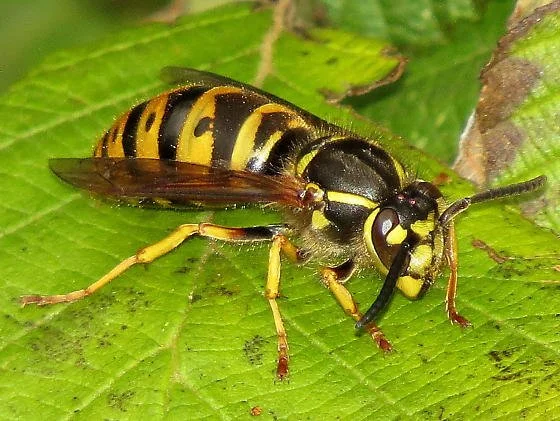
Vespula maculifrons
Eastern Yellow Jackets are wasps found in eastern North America. They can be identified from other wasp species by their smaller size and abdominal pattern. They also have black and yellow lines on their heads, thorax, and abdomens. Queens have two black dots between each black line on the thorax.
Their nests are subterranean, usually in hardwood forests, creekbanks, as well as urban and suburban areas. Typically, they’ll build their nests in underground areas, tree stumps, and sometimes attics.
Eastern yellow jackets are territorial and aggressively defend their hives, they are known to inflict painful stings and it’s best to give them their space.
Bald-Faced Hornet
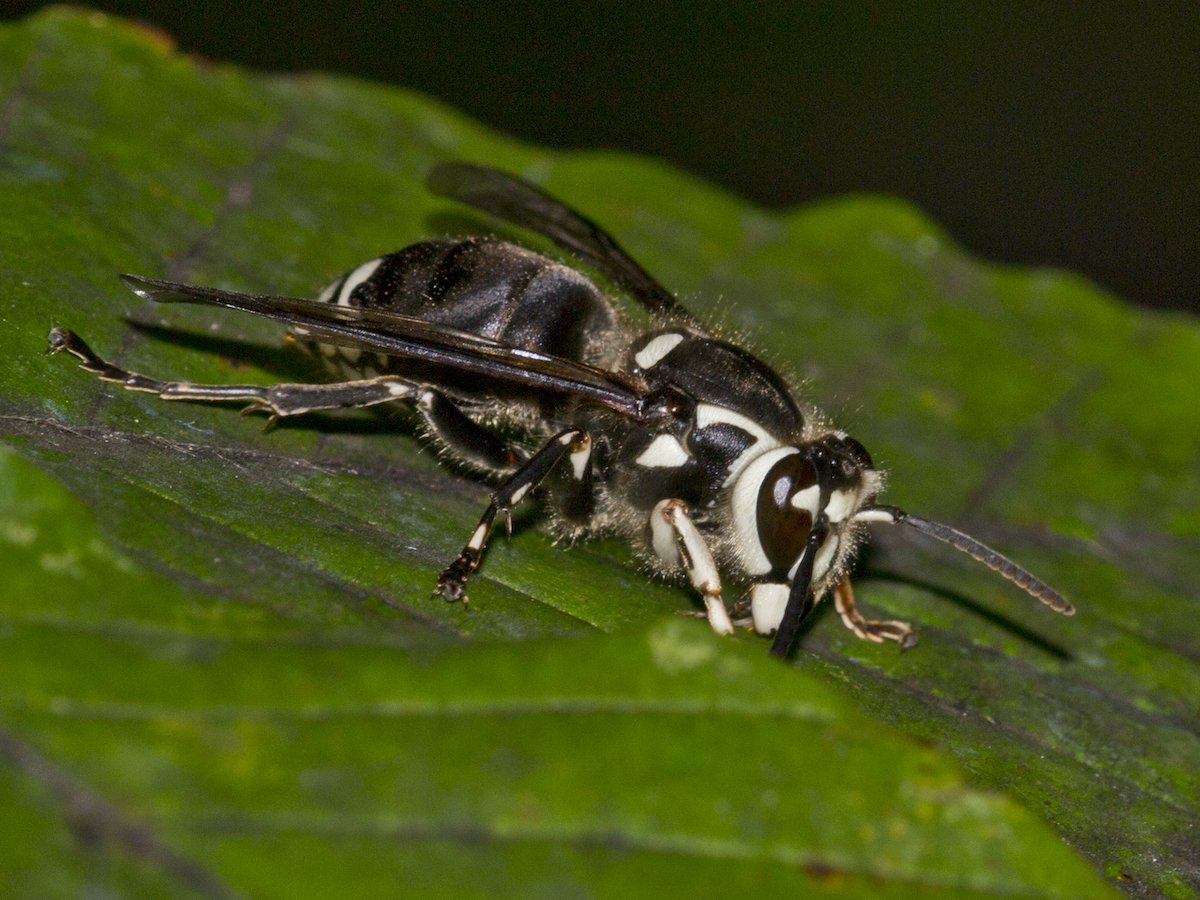
Dolichovespula maculata
Bald-Faced Hornets, also known by many other names like ‘spruce wasp’ and ‘bald-faced aerial yellow jacket’- are technically a species of yellowjacket wasp and not “true” hornets.
They live in colonies containing 400-700 workers, in hanging paper nests up to 23 inches in length. Workers aggressively defend their nests by repeatedly stinging any threat or invader.
They get their name from the white markings on their faces, the word “bald” being derived from “Piebald”. They have striking black and white coloring, and is notably larger than other wasps in its genus.
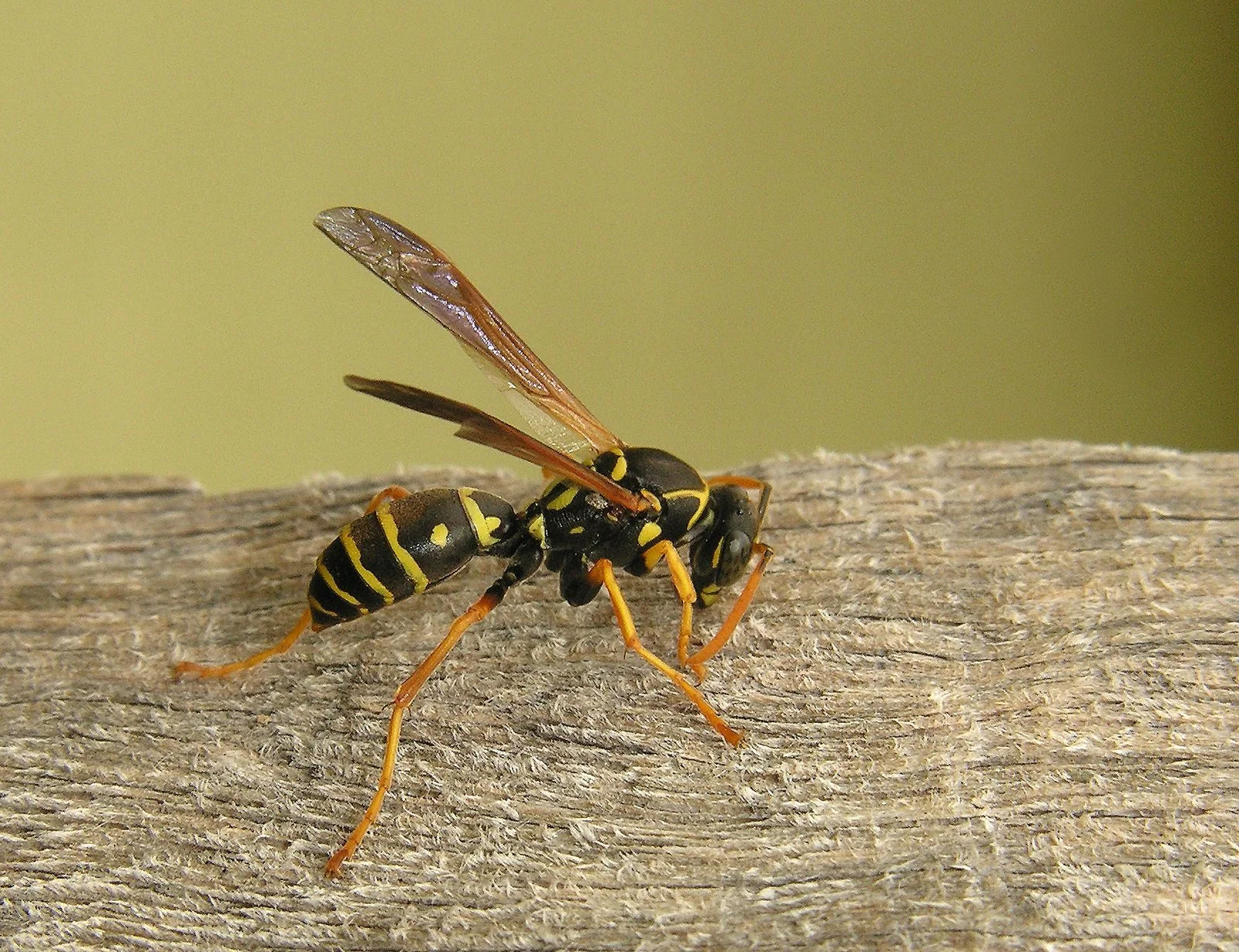
Paper Wasp
Polistes fuscatus
Paper Wasps are social vespid wasps,They get their name from their nests. Having open combs with cells for brood rearing, they gather fibers from plant stems and dead wood mixed with saliva. They use this mixture to form a brown papery material.
They secrete a repellent chemical around the base of the nest, to repel ants from eating their eggs or young larvae. Some subspecies of paper wasp also use mud to form an outer layer of their nest. Nests are usually found in sheltered areas, like the branches of a tree, the end of an open pipe, or under the roof of a building.
Unlike yellowjackets and hornets, Paper Wasps are not distinctly aggressive. They will generally only attack if threatened or disturbed. Their territoriality like most Wasps can lead to humans being stung.